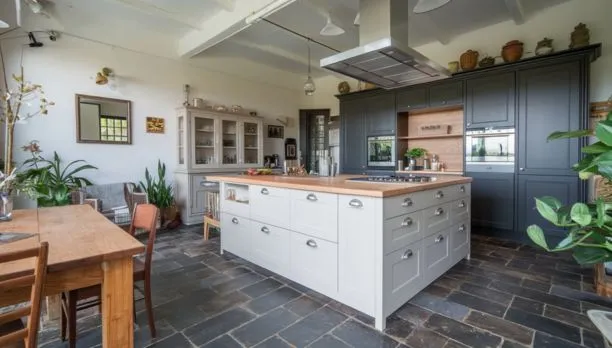
Kitchen trends in 2026 emphasize warmth, sustainability, and smart functionality. According to the National Kitchen & Bath Association’s latest report, 76% of designers now incorporate green cabinetry, while 71% report clients preferring colorful, personalized spaces over minimalist gray kitchens. The dominant trends include:
- Dark wood cabinets (walnut and mahogany) replacing lighter woods
- Earthy color palettes featuring sage green, navy blue, and terracotta
- Smart technology integration with invisible, seamless controls
- Sustainable materials including cork flooring, bamboo, and recycled glass
- Open-concept layouts with defined zones using lighting and flooring
- Two-tone cabinetry creating visual depth and contrast
- Butler’s pantries (secondary “dirty kitchens”) growing 8% year-over-year
- Natural stone statements in backsplashes and countertops
- Curved cabinet details softening angular kitchen lines
These trends reflect how kitchens have evolved from purely functional cooking spaces into multi-purpose hubs for family gatherings, remote work, entertainment, and daily living.
What Makes 2026 Kitchen Design Different?
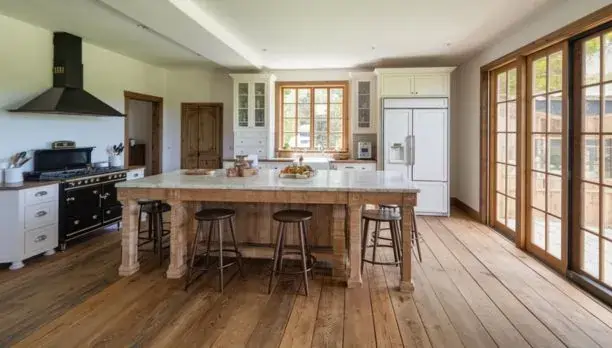
The Shift from Millennial Gray to Warm, Expressive Spaces
According to the National Kitchen & Bath Association’s 2026 Kitchen Trends Report, 71% of designers report that clients now prefer colorful kitchens reflecting personal style over neutral, minimalist spaces. This represents a significant departure from the all-white and gray kitchens that dominated previous decades.
Key Design Philosophy Changes
From Minimalism to Warm Minimalism: While clean lines remain popular, 2026 sees the integration of warm textures, natural materials, and personal touches that make spaces feel lived-in and welcoming.
From Smart Technology to Invisible Technology: Smart appliances are evolving beyond visible screens and controls toward seamless integration that enhances functionality without dominating visual aesthetics.
From Cookie-Cutter to Customized: Homeowners increasingly seek unique, personalized details that reflect their lifestyle, cooking habits, and design preferences rather than following standardized layouts.
At Poseidon Remodeling, we specialize in incorporating sustainable practices into our designs, ensuring your kitchen is both beautiful and environmentally conscious.
Open Concept Kitchen Design 2026
Seamless Living Space Integration
Open-concept kitchen layouts continue dominating new construction and remodels, with 68% of homeowners preferring open floor plans that connect kitchen, dining, and living areas.
Benefits of Open Layouts:
- Enhanced natural light distribution
- Improved traffic flow and functionality
- Better sight lines for supervising children
- Increased home value and marketability
- Perfect for entertaining and family interaction
Defining Zones Without Walls
While maintaining openness, 2026 design emphasizes zone definition through:
- Material transitions (flooring changes)
- Lighting variations (pendant clusters over kitchen island)
- Furniture placement (peninsula or island as boundary)
- Ceiling treatments (beams or coffers)
- Color differentiation
Kitchen Islands as Central Hubs
Multi-functional islands serve as cooking stations, dining areas, homework spaces, and social gathering points. Modern island design incorporates:
- Built-in appliances (wine cooler, microwave drawer)
- Varied countertop heights for seating and prep
- Storage solutions (deep drawers, open shelving)
- Electrical outlets and USB charging ports
- Statement lighting above
Trending Kitchen Cabinet Styles 2026
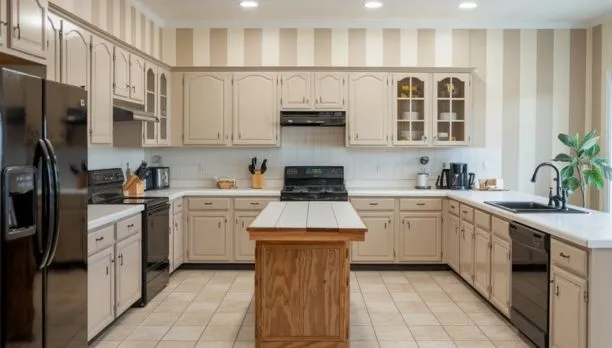
Dark Wood Revival: Walnut, Mahogany, and Rich Grains
Kitchen cabinet trends in 2026 showcase a dramatic return to dark, grain-forward woods. Kristina Khersonsky, principal designer at Studio Keeta, notes that “rich finishes like walnut and mahogany are replacing lighter woods, offering warmth, character, and timelessness that aligns with how people want to experience their kitchens.”
Why Dark Wood Works:
- Creates visual depth and sophistication
- Pairs beautifully with natural stone countertops
- Offers durability and aging grace
- Provides contrast against lighter walls and flooring
Rounded Cabinet Corners and Curved Details
Curved cabinetry represents one of the most distinctive kitchen cabinet trends of 2026. These soft, rounded corners create visual contrast against angular kitchen elements while adding a contemporary yet inviting aesthetic.
Design Applications:
- Lower cabinet corners featuring gentle curves
- Kitchen islands with rounded edges
- Upper cabinets with arched details
- Combination of curved and straight lines for balanced design
Two-Tone Cabinet Combinations
Two-tone cabinetry continues gaining momentum, with designers pairing darker lower cabinets with lighter uppers or creating statement kitchen islands in contrasting colors. This approach adds dimension while maintaining design cohesion.
Popular Combinations:
- Navy lower cabinets with warm white uppers
- Sage green island with natural wood perimeter cabinets
- Deep charcoal base cabinets with cream wall cabinets
- Terracotta accents against neutral backgrounds
Kitchen Color Trends 2026: Beyond White and Gray
Dominant Color Palette
According to industry research, green leads 2026 kitchen color preferences, with 76% of design professionals incorporating it into projects. Blue follows at 63%, and brown-toned hues round out the top three at 56%.
Earthy Greens: From Sage to Forest
Green kitchen cabinets range from soft, calming sage to dramatic forest tones. These nature-inspired hues create tranquil environments while offering versatility across design styles from modern farmhouse to contemporary minimalist.
How to Use Green:
- Full kitchen cabinet coverage in deeper tones
- Kitchen island as a green focal point
- Accent through backsplash or lower cabinets only
- Pair with brass hardware for warmth or black for contrast
Moody Blues: Navy and Beyond
Deep blue cabinetry adds sophistication and depth without the starkness of black. Navy kitchens work exceptionally well with marble countertops, gold accents, and natural wood elements.
Warm Terracottas and Earth Tones
Terracotta and warm clay colors represent the “Strega Nona aesthetic” influencing 2026 design. These hues evoke Italian countryside charm, pairing beautifully with mismatched pottery, hanging herbs, and natural materials.
Strategic Use of Bold Color
Rather than overwhelming spaces, designers recommend strategic color placement:
- Single accent wall in bold hue
- Colored kitchen island contrasting with neutral perimeter
- Backsplash as color focal point
- Lower cabinets only in saturated tones
Kitchen Flooring Innovations 2026
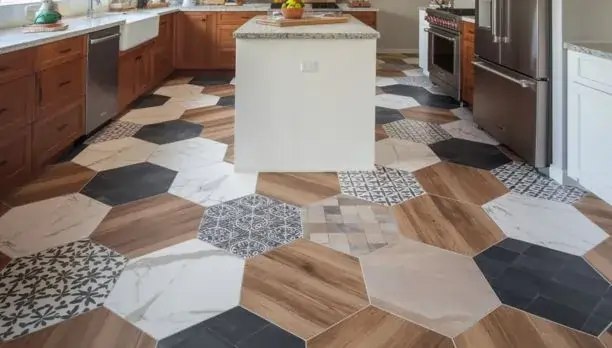
Sustainable Flooring Materials
Eco-conscious homeowners increasingly choose sustainable flooring options that combine environmental responsibility with style and durability.
Cork Flooring: Natural cushioning provides comfort during extended kitchen time while offering renewable, biodegradable material. Cork’s inherent antimicrobial properties make it ideal for kitchen environments.
Bamboo Flooring: Fast-growing bamboo provides hardwood appearance with superior sustainability credentials. Available in various finishes from light natural to dark carbonized, bamboo suits diverse design aesthetics.
Patterned Tile Statements
Geometric tiles, cement tiles with intricate patterns, and colorful encaustic designs create visual interest underfoot. These statement floors work particularly well in open-concept layouts, defining kitchen zones without physical barriers.
Pattern Considerations:
- Scale pattern to room size
- Balance busy floors with simpler cabinet designs
- Choose colors that complement overall palette
- Consider maintenance requirements
Durable Performance Materials
Luxury Vinyl Plank (LVP): Waterproof, scratch-resistant, and available in realistic wood and stone patterns, LVP offers practical elegance for busy kitchens.
Porcelain Tile: Advanced porcelain tiles mimic natural materials while providing superior durability, stain resistance, and easy maintenance. Large-format tiles minimize grout lines for streamlined appearance.
Polished Concrete: Industrial aesthetic continues trending upward, with polished concrete offering unique character, exceptional durability, and low maintenance requirements.
Our experts are specialized in kitchen remodel oceanside projects and sustainable practices into our designs, ensuring your kitchen is both beautiful and environmentally conscious.
Smart Kitchen Technology Integration 2026
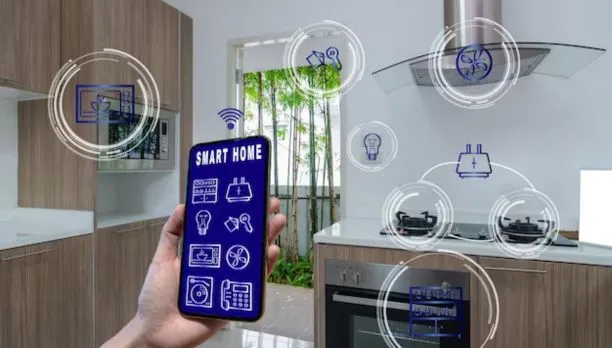
Invisible Technology, Visible Benefits
The smartest kitchens of 2026 hide technology behind seamless cabinetry and intuitive interfaces, focusing on enhancing daily life without visual clutter.
Voice-Activated Systems: Control lighting, temperature, timers, and appliances through natural voice commands integrated with Amazon Alexa, Google Assistant, or Apple HomeKit.
Smart Appliances Features:
- Refrigerators with internal cameras viewable via smartphone
- Ovens with remote preheat and recipe guidance
- Dishwashers optimizing water usage based on load
- Faucets with touchless operation and precise temperature control
- Lighting systems adjusting to time of day and activity
Energy Efficiency Through Smart Design
Smart thermostats, occupancy sensors, and energy monitoring systems help homeowners reduce utility costs while minimizing environmental impact. Energy Star certified appliances combined with LED lighting create kitchens that perform efficiently without sacrifice.
Automated Pantry Management
Emerging smart pantry systems track inventory, monitor expiration dates, and suggest recipes based on available ingredients. These systems reduce food waste while simplifying meal planning.
Kitchen Backsplash Trends 2026
Natural Stone Statements
Bold natural stone backsplashes, particularly on range surrounds, create dramatic focal points. Marble slabs with pronounced veining, quartzite with unique patterns, and exotic granites add luxury and individuality.
Textured Tiles and Dimensional Designs
Dimensional tiles featuring reeded, fluted, or three-dimensional surfaces add tactile interest and play with light throughout the day. These textured surfaces work particularly well in modern and transitional kitchens.
Floor-to-Ceiling Backsplashes
Extending backsplashes to ceiling height creates cohesive, gallery-like walls while simplifying cleaning and maintenance. This approach works beautifully with slab materials or large-format tiles.
Mixed Materials Approach
Combining materials creates visual interest: zellige tile paired with natural stone, subway tile with decorative inserts, or glass tile accenting solid surfaces.
Kitchen Countertop Materials 2026
Durable Natural Stone
Quartzite: Offering marble’s beauty with granite’s durability, quartzite provides heat resistance and scratch resistance ideal for active kitchens.
Granite: Modern granite embraces movement and drama rather than outdated speckled patterns. Exotic slabs with bold veining create focal points.
Marble: While requiring more maintenance, marble’s timeless beauty continues attracting homeowners willing to embrace natural patina development.
Engineered Quartz Evolution
Quartz technology now replicates natural stone appearance more convincingly while maintaining superior durability, stain resistance, and minimal maintenance requirements. New color ranges include warmer tones and realistic veining.
Unique Edge Profiles
Moving beyond standard edges, 2026 sees increased interest in:
- Waterfall edges extending to floor
- Live edge wood integration
- Ogee and other decorative profiles
- Mixed edge treatments on same countertop
Kitchen Storage Solutions and Organization 2026
Innovative Storage Ideas
Deep Drawer Systems: Replace lower cabinets with deep drawers for easier access to pots, pans, and small appliances. Drawer dividers and organizers maintain order.
Pull-Out Pantries: Narrow spaces transform into efficient storage with pull-out pantry systems maximizing every inch.
Corner Solutions: LeMans units, lazy susans, and magic corner systems make previously dead space highly functional.
Appliance Garages: Dedicated spaces hide countertop appliances, maintaining clean lines while keeping items accessible.
Open Shelving: While requiring tidiness, open shelves display beautiful dishes and glassware while making frequently used items immediately accessible.
Vertical Space Utilization
Extending cabinets to ceiling height, adding hanging pot racks, and incorporating ladder-accessible storage maximize cubic footage in space-constrained kitchens.
Kitchen Remodeling Costs 2026
Average Investment Ranges
Minor Refresh: $10,000-$20,000 Surface updates including paint, new hardware, lighting upgrades, and countertop replacement without layout changes.
Mid-Range Remodel: $25,000-$50,000 Semi-custom cabinets, new appliances, countertops, flooring, and backsplash with possible minor layout modifications.
High-End Renovation: $50,000-$100,000+ Custom cabinets, premium appliances, luxury materials, structural changes, and complete layout reconfiguration.
Cost Breakdown by Component
- Cabinetry: 30-35% of budget
- Appliances: 15-20% of budget
- Countertops: 10-15% of budget
- Labor: 20-25% of budget
- Flooring: 7-10% of budget
- Lighting: 5-7% of budget
- Plumbing/Fixtures: 5-7% of budget
Factors Affecting Final Costs
Kitchen Size: Remodeling costs typically range $150-$250 per square foot for complete renovations.
Geographic Location: Labor and material costs vary significantly by region, with urban areas generally commanding higher prices.
Material Selection: Budget laminate versus exotic stone creates substantial cost differences.
Structural Changes: Moving plumbing, electrical, or walls increases complexity and expense.
Permit Requirements: Depending on scope, building permits add $500-$2,000+ to project costs.
Cost-Saving Strategies
- Retain existing layout to avoid plumbing/electrical relocation
- Choose stock or semi-custom cabinets over full custom
- Install new cabinet fronts and hardware on existing boxes (refacing)
- Select mid-range appliances in stainless or panel-ready models
- DIY paint and demolition where qualified
- Time renovation for contractor off-season
Conclusion
Kitchen design in 2026 celebrates individuality, sustainability, and livability. Whether embracing bold colors, incorporating smart technology, or maximizing small spaces, successful kitchens balance trending elements with timeless principles and personal preferences.
The most important consideration remains creating a space serving your lifestyle and cooking habits. Trends provide inspiration and direction, but your kitchen should ultimately reflect how you live, entertain, and gather with family.
FAQs
What kitchen cabinet colors are trending in 2026?
Green leads 2026 preferences (76% of designers), followed by blues (63%) and warm browns (56%). Deep walnut, navy, sage, and terracotta represent popular specific choices.
Are white kitchens outdated in 2026?
While still acceptable, all-white kitchens feel dated compared to layered approaches incorporating warm neutrals, natural wood, and strategic color. Designers recommend adding depth through texture, contrast, and material variation even when using predominantly white palettes.
What flooring is best for kitchens in 2026?
Luxury vinyl plank offers best value and performance. Cork and bamboo provide sustainable options. Large-format porcelain tiles deliver timeless elegance. Patterned cement tiles create statement floors. Choice depends on budget, maintenance preferences, and design aesthetic.
Is open concept still popular in 2026?
Yes, open layouts remain highly desired, with 68% preferring connected spaces. However, 2026 design emphasizes defined zones within open plans through flooring transitions, lighting, and furniture placement rather than complete openness.
How much does a kitchen remodel cost in 2026?
Minor updates: $10,000-$20,000. Mid-range remodels: $25,000-$50,000. High-end renovations: $50,000-$100,000+. Costs vary by location, size, materials, and scope. Average investment per square foot ranges $150-$250 for complete renovation.
What smart kitchen features are worth investing in?
Voice-controlled lighting and appliances, smart refrigerators with cameras, touchless faucets, and automated pantry systems provide practical benefits justifying investment. Focus on features enhancing daily routines rather than novelty.
Are kitchen islands necessary?
While not essential in small spaces, islands provide valuable benefits: additional prep surface, storage, seating, and social gathering point. In kitchens 150+ square feet, islands typically improve functionality and home value.