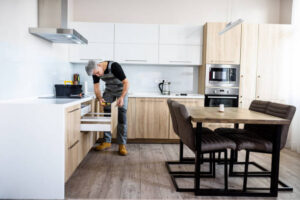

A toe kick in kitchen cabinetry is the recessed space at the bottom of your base cabinets. It lets you stand close to counters without stubbing your toes. This small detail makes a big difference in how your kitchen functions every day.
Most people never notice this feature until they plan a remodel. Yet it affects comfort, cleaning, and even resale value. Understanding toe kicks helps you make smarter choices for your kitchen project.
Table of Contents
ToggleWhat is the Purpose of Toe Kicks in Kitchen Cabinets
The cabinet kick plate serves three main functions in your kitchen. First, it provides clearance for your feet when you work at countertops. Without this space, you’d lean forward awkwardly while cooking or washing dishes.
Second, toe kicks protect the cabinet base from kicks and bumps. Daily wear happens at floor level. The recessed area keeps cabinet doors and drawer fronts safe from scuffs.
Third, this design makes cleaning easier. You can sweep or mop right up to the cabinets. Crumbs and spills don’t get trapped in hard-to-reach corners.
Poseidon Remodeling includes proper toe space under kitchen cabinets in every kitchen design. Our kitchen Remodeling Oceanside service ensures your cabinets meet ergonomic standards while matching your style preferences.
Standard Toe Kick Dimensions for Kitchen Cabinetry
Industry standards exist for good reason. The typical recessed cabinet base or kick space measures 3 to 4 inches deep and 3.5 to 4 inches tall. These measurements work for most adults.
The 3.5-inch height became standard because it aligns with two pieces of lumber stacked together. Cabinet manufacturers built this into their designs decades ago. Most base cabinets now come with built-in toe kick spaces at this height.
Depth matters just as much as height. A 3-inch recess gives adequate foot space. Some homeowners prefer 4 inches for extra comfort. Anything deeper than 4 inches can make cabinets look unusual and reduce storage space.
Custom kitchens sometimes use different dimensions. Taller individuals might want 4.5-inch height. Wheelchair users need different clearances entirely. Your specific needs should guide these choices.
Flush vs Recessed Toe Kick: Understanding Your Options
Two main styles exist for toe kicks in kitchen design. Each has distinct advantages depending on your priorities.
A recessed toe kick sits back from the cabinet face. This is the traditional approach. It provides maximum foot clearance and creates visual depth. Most kitchens use this style because it offers the best ergonomics.
A flush toe kick aligns with the cabinet face. Some modern designs prefer this clean look. European-style kitchens often feature flush toe kicks. They create sleek, minimalist lines.
The flush style sacrifices some comfort for aesthetics. You can’t get quite as close to counters. However, the difference is subtle. Many people find flush designs perfectly functional.
Consider maintenance too. Recessed toe kicks hide dust better. Flush designs show every speck. If you have kids or pets, recessed might be more practical.
Difference Between Toe Kick and Base Molding in Cabinets
People confuse these terms often. They’re related but serve different purposes.
The toe kick is the structural recess at the cabinet bottom. It’s built into the cabinet box itself. This space exists whether you add any finishing touches or not.
Base molding is decorative trim that covers the toe kick area. Think of it as clothing for the structural space. The molding can match your cabinets, contrast with them, or extend your flooring material.
Some kitchens leave toe kicks exposed. Others add matching panels. Still others install molding that coordinates with room baseboards. Your choice affects the finished look significantly.
Quality installations consider both elements. The structural toe kick must meet ergonomic standards. The finishing touches should complement your overall design.
Toe Kick Drawers Pros and Cons
Hidden storage in toe kick spaces has gained popularity. These shallow drawers use otherwise wasted space. But they’re not right for every kitchen.
Advantages of toe kick drawers:
Cookie sheets and cutting boards fit perfectly. These flat items are hard to store in standard cabinets. Toe kick drawers keep them accessible and organized.
Kids can reach these drawers easily. Store plastic containers, placemats, or art supplies at their level. This promotes independence and reduces clutter.
The kitchen gains storage without adding cabinets. Small kitchens benefit most from this extra capacity. Every inch counts in compact spaces.
Disadvantages to consider:
Installation costs increase significantly. Toe kick drawers require special hardware and precise fitting. Expect to pay premium prices for this feature.
Cleaning becomes more complex. Crumbs fall into drawer tracks. Maintenance requires more attention than standard toe kicks.
Not all items work in shallow spaces. The 3 to 4-inch height limits what you can store. Pots, appliances, and tall containers won’t fit.
Weight capacity is limited. Don’t overload these drawers. They’re designed for lighter items only.
How to Install a Tile Toe Kick: Step-by-Step
1. Prepare the Surface Start by ensuring your toe kick area is clean, level, and free from debris. If installing on an existing wood toe kick, lightly sand the surface to help adhesive bond properly. For new construction, install a substrate board (typically 1/4-inch plywood or cement board) as your tile base.
2. Plan Your Layout Dry-lay your tiles first to determine the best arrangement. Consider how tile lines will align with cabinet edges and floor tiles. Planning prevents awkward cuts and ensures a professional appearance.
3. Apply Thinset Mortar Using a notched trowel (usually 3/16-inch notches for smaller tiles), spread thinset mortar evenly across the toe kick surface. Work in small sections to prevent the mortar from drying before you set the tiles.
4. Set the Tiles Press each tile firmly into the mortar with a slight twisting motion to ensure good adhesion. Use tile spacers to maintain consistent grout lines. Check frequently with a level to ensure tiles remain even.
5. Cut Edge and Corner Tiles Use a wet saw or tile cutter for precise cuts around corners, ends, and any obstacles. Measure twice and cut once for best results.
6. Allow Proper Drying Time Let the thinset cure for at least 24 hours before grouting. Avoid walking near or bumping the tiles during this period.
7. Apply Grout Mix grout according to manufacturer directions. Using a rubber grout float, spread grout diagonally across tiles, forcing it into all joints. Remove excess by wiping diagonally with a damp sponge, rinsing frequently.
8. Seal and Finish Once grout has cured (typically 72 hours), apply a grout sealer to protect against stains and moisture. This step is especially important in the toe kick area where water contact is frequent.
Common Toe Kick Mistakes to Avoid
Even experienced remodelers make errors. Learn from others to save time and money.
Incorrect dimensions cause the biggest problems. Too shallow feels cramped. Too deep looks strange and wastes space. Stick with standard measurements unless you have specific reasons to vary.
Poor material choices lead to premature wear. Particleboard swells when wet. Low-quality paint chips easily. Invest in appropriate materials for this high-traffic area.
Ignoring flooring thickness throws off calculations. Today’s floor might be thinner than tomorrow’s. Plan for potential flooring changes.
Forgetting about appliances creates issues. Dishwashers and ranges need toe kick clearance too. Coordinate these elements during planning.
Skipping the finish leaves projects looking incomplete. Raw edges collect dirt and look unfinished. Always add appropriate finishing touches.
Why Choose Poseidon Remodeling for Your Kitchen Remodel
- Expert craftsmanship with attention to detail
We ensure every feature including the toe kick in kitchen cabinetry is installed with precision and care. - Custom toe kick designs for every style
Whether you prefer modern, rustic, or luxury looks, we design toe kicks to match your vision and elevate your kitchen remodel oceanside. - High-quality, local service at fair prices
As a trusted local contractor, Poseidon Remodeling delivers top-tier results without overcharging. - Client-focused remodeling process
From start to finish, we put your needs first ensuring your remodel runs smoothly and reflects your personal style. - Smart solutions with lasting impact
We integrate practical details like a well-built toe kick in kitchen cabinetry that enhance comfort, style, and durability.
Final Thought
A toe kick in kitchen cabinetry is a small but essential design feature that improves comfort, ergonomics, and the overall look of your kitchen. Knowing what is a toe kick and what are toe kicks helps you choose the right style for your space. From a practical tile toe kick to design-focused flush vs recessed toe kick, each option balances aesthetics and functionality.
By paying attention to this detail during your remodel, you protect your cabinets, enhance posture while working, and create a cleaner, polished appearance. A well-designed toe kick makes your kitchen both stylish and user-friendly. Contact us Poseidon Remodeling today and let us help you build a kitchen that looks great and works even better.
FAQs
What is the standard toe kick height and depth?
The industry standard is 3.5 to 4 inches in height and 3 to 4 inches in depth. However, these dimensions can be customized based on cabinet height, personal preference, and ergonomic needs.
Can I eliminate toe kicks entirely?
While possible, eliminating toe kicks forces you to stand farther from countertops, creating ergonomic challenges during food preparation and cleanup. Most homeowners who remove toe kicks for aesthetic reasons eventually regret the decision due to comfort issues.
How do I clean toe kicks effectively?
For routine cleaning, use a damp microfiber cloth with mild soap. For scuff marks, try a magic eraser or baking soda paste. Avoid harsh chemicals that might damage finishes, especially on wood surfaces.
Should toe kicks match cabinets or flooring?
There’s no single right answer. Matching cabinets creates visual continuity, while matching flooring can make your kitchen feel more spacious. Some designers use contrasting colors as an accent. Choose based on your overall design vision.
Can I add toe kick drawers to existing cabinets?
Yes, though it requires removing existing toe kicks, building drawer boxes, installing slides, and fabricating drawer fronts. It’s definitely possible as a DIY project for handy homeowners or as a professional retrofit.
What causes toe kicks to become damaged?
The most common culprits are vacuum cleaners, wet mops, kicks and impacts from feet and shoes, pet scratches, water leaks from appliances, and age-related wear. Choosing durable materials and applying protective sealers minimizes these issues.