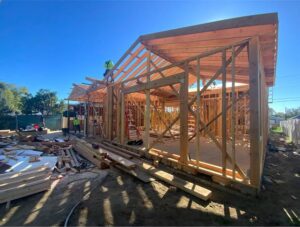

Want to add outdoor living space without pouring concrete or dealing with permits? Learning How to Build a floating deck gives you a flexible, budget-friendly way to upgrade your backyard fast.
In this guide, you will learn the full build process, real costs, common mistakes, and when DIY makes sense. This advice comes from hands-on remodeling experience at Poseidon Remodeling, serving homeowners through Home remodeling Oceanside and nearby areas.
What Is a Floating Deck and How It Actually Stays Stable
A float deck rests on surface blocks instead of being buried in concrete. The name confuses people. It doesn’t actually float in the air. The structure sits firmly on the ground using deck blocks vs concrete footings to support a method that Poseidon Remodeling uses to build stable, long-lasting outdoor spaces.
How a Floating Deck Works Without a Concrete Foundation
The blocks spread weight across the ground surface. Each block sits in a shallow bed of gravel and sand. This creates a stable base without digging deep holes. The frame distributes weight evenly to each support point.
Pressure-treated lumber for decks makes up the frame and joists. Ground contact lumber works best since it sits close to soil. The boards resist moisture and decay better than standard wood.
Is a Floating Deck Safe for Long-Term Use?
Yes, when built correctly. The key is proper ground prep and level installation. Most failures happen from skipping drainage or poor leveling. Shallow frost zones allow floating decks. Deep winter frost areas need buried posts instead.
Small decks under 200 square feet and less than 30 inches high rarely shift. Larger builds need more blocks for support. The deck foundation and support system must match the load it carries.
Floating Deck vs Attached Deck (Quick Comparison for Decision Makers)
Choosing the right deck type matters before you start designing a floating deck.
| Feature | Floating Deck | Attached Deck |
| Cost | $15–35 per sq ft | $25–50+ per sq ft |
| Permits | Often not required | Usually required |
| Install time | 2–3 days DIY | 3–7 days |
| Foundation | Deck blocks | Concrete footings |
| Stability | Good with minor movement | Excellent |
| Best use | Small, budget builds | Elevated, permanent decks |
Choose a floating deck if your budget stays under $4,000, your design is simple, and you want to avoid house attachment. Choose an attached deck if height exceeds 30 inches or resale value is a priority.
A real example helps:
- 10×12 floating deck: $2,000 to 4,000 DIY and $4,000 to 500 pro
- Same size attached deck: $3,000 to 6,000 DIY and $6,000 to 12,000 pro
Can You Build a Floating Deck Without Concrete?

Deck Blocks vs Concrete Footings
Deck blocks offer faster installation and easier adjustments. They cost $8-15 each compared to $50-100 per concrete footing. Blocks work in stable soil without deep frost.
Concrete footings last longer in problem soils. They resist shifting better on slopes. High-load applications need concrete support. The ground-level deck planning and layout determines which option works best.
When Concrete Is Still a Better Choice
Raised floating decks above 24 inches need concrete. Heavy features like hot tubs require solid footings. Poor drainage areas benefit from buried concrete. Clay soil that expands needs deeper support.
Similar to checking if a Wall is Load Bearing in home renovation, soil testing helps decide foundation type. Professional analysis costs $200-400 but prevents future problems.
Tools and Materials You Will Need (No Guessing)
Essential Tools Checklist
Measuring and leveling tools:
- 25-foot tape measure
- 4-foot level
- String line and stakes
- Laser level (optional but helpful)
Cutting and fastening tools:
- Circular saw
- Drill with bits
- Impact driver
- Speed square
- Sawhorses
Safety gear:
- Safety glasses
- Work gloves
- Dust mask
- Knee pads
Materials List With Practical Notes
Pressure-treated lumber grades: Use ground contact rated lumber for all frame pieces. Regular pressure-treated works for deck boards. Buy straight boards without large knots or splits.
Deck blocks and gravel base: Plan 1 block per 16 square feet of deck. Get 2-3 inches of paver base and leveling sand per block location. Extra blocks cost less than structural problems.
Fasteners that resist corrosion: Galvanized or coated deck screws prevent rust. Joist hangers need special screws rated for them. Never use drywall screws on outdoor projects.
Decking boards comparison: Cedar looks natural but needs yearly sealing. Composite costs more upfront but requires less maintenance. Pressure-treated lumber offers the best budget option.
Step-by-Step: How to Build a Floating Deck Correctly
Step 1: Planning, Measuring, and Marking the Layout
Start with your final deck size. Add 12-16 inches to account for beam overhang. Mark corners with stakes and string. Use the 3-4-5 triangle method to ensure square corners.
Measure both diagonals. They should match exactly. This floating deck construction steps approach prevents future problems. Take photos of your measurements for reference.
Step 2: Ground Preparation and Drainage
Leveling ground for a floating deck starts with removing grass and debris. Dig shallow holes 4-6 inches deep at each block location. Keep the bottom as undisturbed as possible.
Add 2 inches of paver base in each hole. Tamp it down firmly. Layer 1 inch of leveling sand on top. Compact again. This creates drainage and prevents settling.
Slope the ground slightly away from your house. A 1-inch drop per 8 feet directs water properly. Skip the weed barrier if you prefer natural drainage. Chemical treatments work better long-term.
Step 3: Installing Deck Blocks and Leveling
Place blocks on prepared bases. Use your level to check in both directions. Add or remove sand to adjust height. Pick your highest point first.
Make all other blocks level with or below this reference point. Shims fill small gaps later. Block spacing depends on joist span. Typical layouts use 4-6 foot spacing.
Step 4: Building the Frame
Cut rim joists to exact deck dimensions. Attach them with 3-inch deck screws. Pre-drill holes near board ends to prevent splits. Install joist hangers every 16 inches on center.
Place joists in hangers with proper nails or screws. Each joist must sit level and flush with rim boards. Check diagonal measurements again to confirm square frame.
Add blocking between joists at mid-span for decks over 8 feet wide. This prevents bounce and adds rigidity. How to build a deck on the ground requires solid framing techniques.
Step 5: Installing Deck Boards
Start at the straightest edge or house side. Leave 1/8 inch gap between boards for drainage and expansion. Some composite materials need 1/4 inch gaps.
Drive two screws per joist into each board. Keep screw lines straight for a clean appearance. Check board alignment every few rows. Minor adjustments prevent big problems later.
Hidden fasteners create seamless looks but cost more and take longer. Standard screws work fine for budget builds. Color-matched screws blend better with deck boards.
Step 6: Final Stability and Safety Checks
Walk across the entire deck checking for flex or movement. Adjust blocks if any section moves. Add extra blocks under problem areas.
Recheck level in multiple directions. Small variations won’t cause issues. Gaps over 1/2 inch need attention. Plan seasonal checks since ground settles over time.
Cost Breakdown: How Much Does a Floating Deck Really Cost?
Average DIY Cost Range
Small decks (8×10 feet): $600-1,200 Medium decks (10×12 feet): $1,200-2,000
Large decks (12×16 feet): $2,000-3,500
Material quality drives cost differences. Composite boards run $30-45 per square foot. Pressure-treated lumber costs $15-25 per square foot installed.
Hidden Costs Homeowners Miss
Power tool purchases add $200-500 for new DIYers. Rental tools cost $50-100 per day. Ground prep materials need $100-200 beyond initial estimates.
Replacement material waste runs 10-15% extra. Order 10% more boards than calculated. Fastener costs add up quickly at $100-200 per project. Similar to Cost to Build a Fence, always budget 20% extra for surprises.
Floating Deck Cost vs Hiring a Professional
Professional installation costs $25-40 per square foot total. A 10×12 deck runs $3,000-4,800 installed. You save 60-70% doing it yourself.
Time investment matters. DIY takes 20-40 hours over several weekends. Professionals complete work in 2-3 days. Factor your hourly rate when comparing costs
Common Mistakes to Avoid
Many failures come from skipping basics during Ground-level deck planning and layout.
- Not checking permits
- Poor leveling ground for a floating deck
- Wrong joist spacing
- Ignoring drainage slope
- Using indoor screws outdoors
- Forgetting wood expansion gaps
- Building too close to property lines
Comparing deck blocks vs concrete footings without understanding soil conditions is another issue. Deck blocks work well on firm soil but need adjustment over time.
Why Choose Poseidon Remodeling for Your Floating Deck
Many homeowners reviewing their Reasons to Remodel Your Home choose outdoor living spaces first. We make that vision real with professional results.
What sets us apart:
- Licensed team handles all permits and inspections
- Premium materials aligned with Eco Friendly Home Renovations practices
- Most projects completed in 2-3 days
- Transparent pricing with no hidden fees
- Written warranties on materials and labor
- Free consultation to discuss your project
Ready to start? GET YOUR FREE QUOTE Now for your free floating deck consultation.
Conclusion
Learning How to Build a floating deck gives homeowners control over cost, design, and timing. With solid planning, proper materials, and care during leveling, a floating deck can last decades. If you want it built right without stress, Poseidon Remodeling can manage the entire process. Contact our Home remodeling Oceanside team for a free consultation and honest guidance.
Frequently Asked Questions
Does a floating deck shift over time?
Properly built floating decks stay level for years. Ground settling happens in the first season. Annual checks and minor block adjustments maintain level. Well-prepared bases prevent significant movement.
How long does a floating deck last?
Pressure-treated lumber lasts 15-20 years with proper maintenance. Composite decking lasts 25-30 years. Frame longevity depends on moisture protection. Regular sealing and drainage maintenance extend life significantly.
Can a floating deck be built on grass?
Yes, but remove grass first for best results. Grass dies under decks anyway from lack of sunlight. Cleared ground allows proper drainage. Weed barrier helps prevent regrowth through deck gaps.
Is a floating deck safe without concrete?
Absolutely safe when properly built. Deck blocks provide stable support on firm ground. Code-compliant construction ensures safety. Small residential decks work perfectly on block foundations.
What is the best base for a floating deck?
Compacted paver base topped with leveling sand creates the best foundation. This combination drains well and resists settling. Avoid pure sand bases that shift easily. Skip gravel-only bases that lack fine adjustment capability.